
Layout Blocks / Fifishing Content InnerEditAddX Current Gulf Shores, AL Fishing Report & Forecast

How to Target Tuna on an Alabama Charter Without Chumming

Published March 11th, 2026 by MSC Fishing Charters

Most anglers think chumming is the only way to pull tuna in close. Throw bait, wait for the frenzy, hook up. But the Gulf doesn't require that mess — and if you're relying on it, you're missing half the game. Tuna off Alabama's coast are aggressive, opportunistic, and constantly on the move. They don't need a chum slick to bite. They need the right presentation at the right time.

How to Target Tuna on an Alabama Charter Without Chumming

So here's the reality. If you're booking a charter to chase yellowfin or blackfin, you don't need buckets of cut bait stinking up the deck. You need sharp eyes, fast reflexes, and a captain who knows where the fish are feeding. Every strike should come from strategy, not just sitting and waiting. Every hookup should be earned through movement and precision — not just dumping chum and hoping something shows up.

Reading the Water Tells You Everything

Tuna don't announce themselves with neon signs. But they leave clues everywhere if you know what to look for. The Gulf is full of indicators that scream "fish here" — you just have to train your eyes to catch them before someone else does.

Bird activity is the most obvious giveaway. When you see terns or gulls diving hard and working a tight area, there's bait getting hammered below. Tuna push baitfish to the surface, and birds capitalize on the chaos. If the birds are circling lazily, keep moving. If they're dive-bombing like kamikaze pilots, get your lines ready.

  • Surface breaks and splashing baitfish signal active feeding
  • Floating debris and weed lines concentrate bait and predators
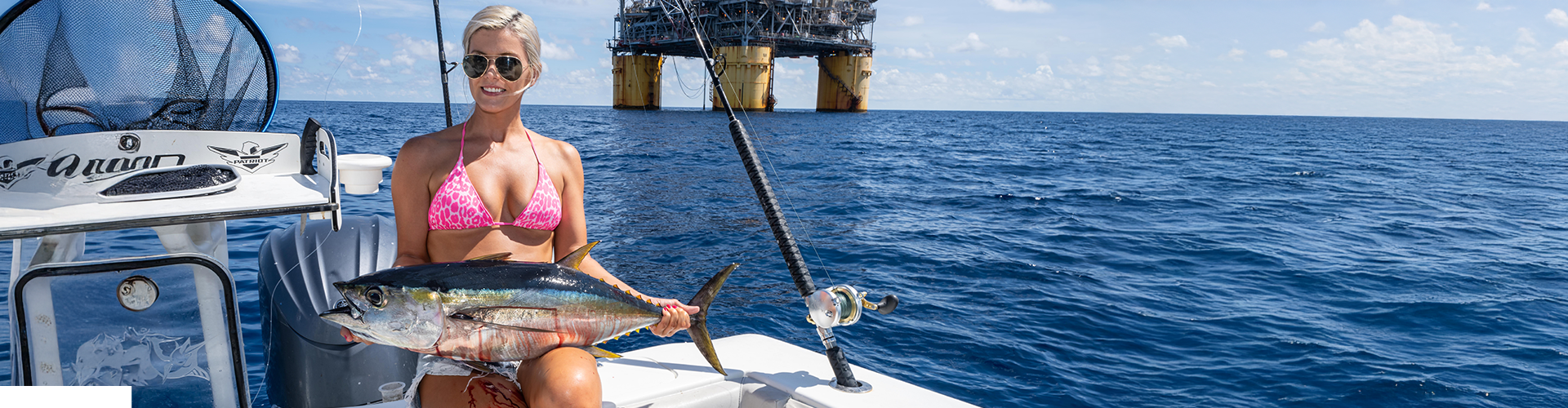
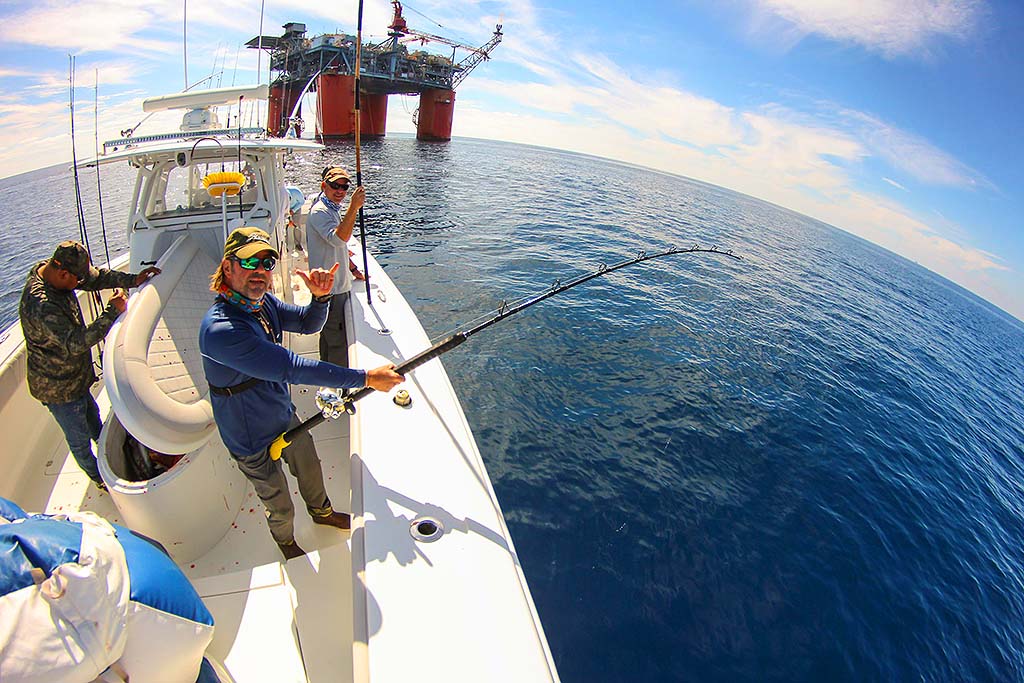
  • Oil rigs create structure that attracts entire food chains
  • Temperature breaks show up on sonar and hold baitfish schools
  • Radar and fish finders reveal subsurface activity you can't see

Trolling Covers Ground and Triggers Strikes

Trolling isn't passive fishing. It's an active search pattern that lets you cover miles of water while presenting lures that mimic fleeing bait. Tuna are visual hunters with speed to burn, and a well-rigged trolling spread can pull them out of nowhere.

Run a mix of cedar plugs, skirted ballyhoo, and diving lures at varying depths. Adjust your speed based on conditions — sometimes tuna want a fast-moving target target, other times they prefer a slower, more natural presentation. The key is variety. If one lure isn't getting hit, swap it out. If the fish are deep, add weight or switch to a deeper-diving plug. Trolling techniques in Gulf waters let you adapt on the fly without anchoring yourself to one spot.

  • Cedar plugs mimic small baitfish and create flash
  • Skirted ballyhoo offer natural scent and realistic action
  • Diving plugs reach deeper zones where tuna cruise
  • Vary your spread to test different colors and sizes
  • Speed adjustments can make or break your hookup rate

Surface Feeds Demand Quick Reflexes

When tuna blow up on bait at the surface, you've got a narrow window to capitalize. These feeding frenzies are explosive, chaotic, and over in minutes. Miss your shot, and the school vanishes like it was never there.

Approach the action quietly — don't gun the engine and spook the fish. Cast beyond the feeding zone and retrieve your lure through through the chaos. Poppers and stickbaits work best here, creating surface commotion that mimics injured baitfish. Tuna hit hard and fast during these feeds, so keep your drag tight and your rod tip up. One solid hookset and you're in for a fight.

  • Poppers create surface noise that triggers aggressive strikes
  • Stickbaits mimic fleeing baitfish with erratic action
  • Cast beyond the school to avoid spooking the fish
  • Retrieve fast enough to keep the lure moving but not skipping
  • Be ready for multiple hookups if the school stays active

Jigging Works When Fish Are Holding Deep

Not every tuna is feeding on the surface. Plenty of them cruise deeper, especially around oil rigs or over bait schools that haven't pushed up yet. That's where vertical jigging shines.

Drop a heavy metal jig to the depth where your sonar shows fish or bait. Work it with sharp, aggressive jerks that create flash and vibration. Tuna respond to that erratic motion — it looks like a wounded baitfish trying to escape. When they hit hit, it's violent. Keep your drag set firm and be ready to fight them away from structure. Jigging is physical, but it's one of the most effective ways to pull tuna out of deeper water without chum.

  • Metal jigs create flash and vibration that attract tuna
  • Work the jig with fast, erratic jerks for best results
  • Target depths where sonar shows bait or fish activity
  • Use braided line for better sensitivity and hooksets
  • Keep your drag tight to prevent fish from reaching structure

Live Bait Drifting Brings Natural Presentation

If you can catch live hardtails or menhaden, drifting them near structure or bait schools is deadly. Tuna can't resist a live bait swimming naturally in their zone. Rig it with a circle hook and let it do the work.

This method requires patience and attention. Watch your line for subtle twitches or sudden runs. Tuna often grab live bait and take off before you even feel the hit. Let them run a few seconds before setting the hook — circle hooks work best when the fish hooks itself. Drifting live bait is less flashy than casting or jigging, but it's one of the most reliable ways to get a bite when tuna are being selective.

Gear That Holds Up Under Pressure

Tuna don't give you second chances. Your gear needs to handle brutal runs, sudden direction changes, and sustained pressure. Cheap tackle fails when it matters most.

Use medium to heavy spinning or conventional setups rated for 30 to 80-pound line. Braided line gives you strength and sensitivity, while a fluorocarbon leader reduces visibility in clear Gulf water. Stock lures in natural baitfish colors — silvers, blues, greens — and carry backups. Tuna will destroy lures, snap leaders, and test every weak point in your setup. If your gear isn't up to the task, you'll lose fish.

  • Medium to heavy rods rated for 30-80 lb line
  • High-capacity reels with smooth, reliable drags
  • Braided mainline for strength and sensitivity
  • Fluorocarbon leaders to reduce visibility
  • Lures in natural baitfish colors with sharp hooks

Your Captain Knows More Than You Think

Booking a charter means you're paying for local knowledge. Your captain has spent hundreds of days on these waters and knows where tuna show up, when they feed, and what they're hitting. Don't ignore that expertise.

Communicate your goals, but trust their judgment. If they say move, move. If they tell you to switch lures or adjust your technique, do it. The best charters are collaborative — you bring the effort, they bring the knowledge. Stay mobile, stay ready, and keep your deck clear. When tuna show up, chaos follows. The crews that stay organized and responsive are the ones that land fish.

Action Beats Waiting Every Time

Chumming is a waiting game. You sit, you hope, you throw more bait. Targeting tuna without chum is the opposite — it's movement, adaptation, and aggression. You're hunting, not baiting.

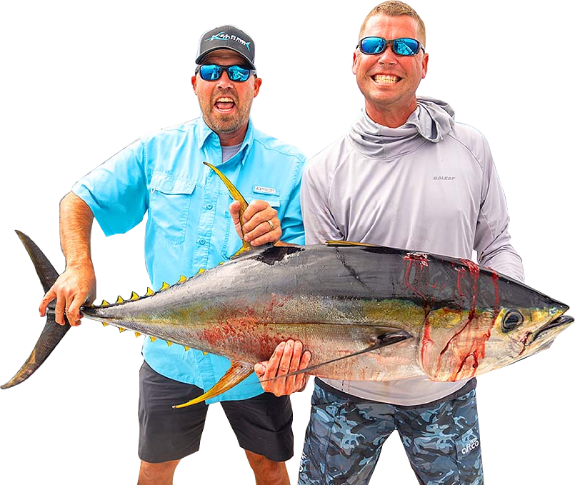
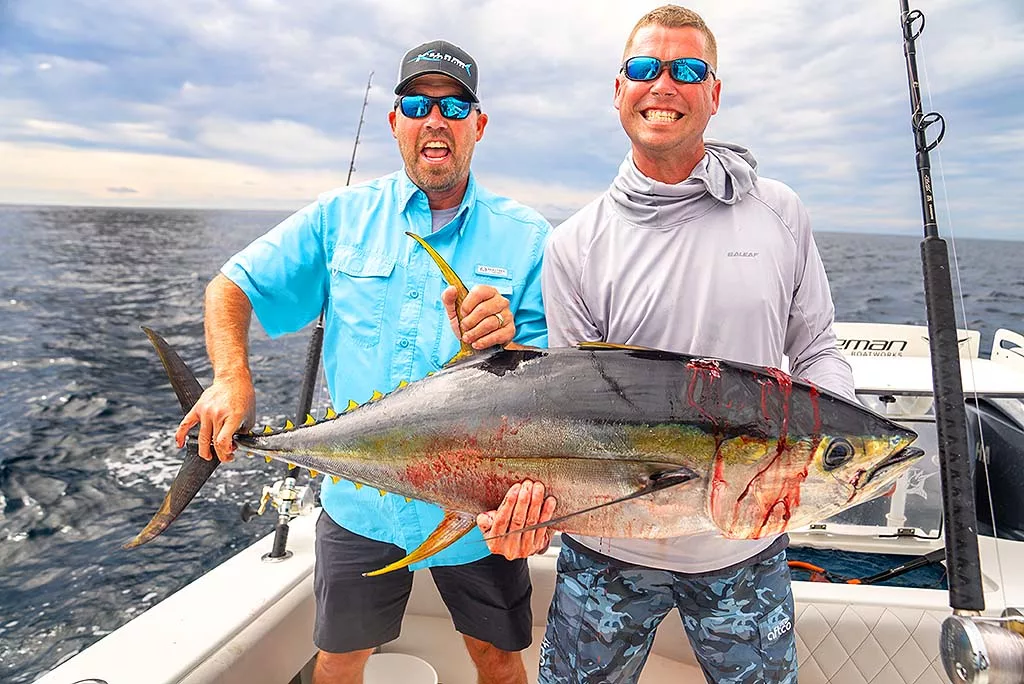
The Gulf rewards anglers who stay active and read conditions in real time. Yellowfin tuna fishing in Alabama requires trolling, casting, jigging, drifting live bait — these techniques put you in control. You're not hoping tuna find your chum slick. You're finding them first and putting putting lures in their face. Deep sea fishing adventures in the Gulf of Mexico demand this level of preparation and strategy. Booking a fishing charter in Gulf Shores gives you access to captains who understand these methods. Fish species you'll catch deep sea fishing include yellowfin and blackfin tuna when you use these active techniques. Getting ready for your first deep sea fishing trip means understanding that action beats waiting every time. That's how you turn a good day into a great one. That's how you walk off the boat with stories worth telling and fish worth weighing.

Let’s Get You Hooked Up on Alabama Tuna

We know the thrill of chasing tuna in the Gulf and the satisfaction that comes from landing one without relying on chum. If you’re ready to experience a hands-on, action-packed charter with a crew that lives for these moments, let’s make it happen together. Call us at 251-508-1674 or contact us today to start planning your next unforgettable trip.


‹ Back

Let's Build a Crew - Join Our Mailing List!

We send alerts about upcoming fishing charters and we'll pick one lucky subscriber out of every 100 to join us on a fishing charter for FREE!

*No spam, no bs, just fish. Just an email when we ride.